Astrobotic Technology is a commercial aerospace manufacturer headquartered in Pittsburgh, Pennsylvania, that builds lunar landers, rovers, and surface power systems. The company was founded in 2007 by Red Whittaker, with John P. Thornton also listed as a founder.
The company launched its first lunar flight, Peregrine Mission One, on January 8, 2024, aboard the maiden launch of United Launch Alliance’s Vulcan Centaur rocket. A propellant leak left the spacecraft unable to reach the Moon, forcing a controlled atmospheric reentry into the South Pacific Ocean ten days later. The company is now preparing its larger Griffin lander for surface delivery operations.
What Astrobotic Technology Builds for Surface Operations
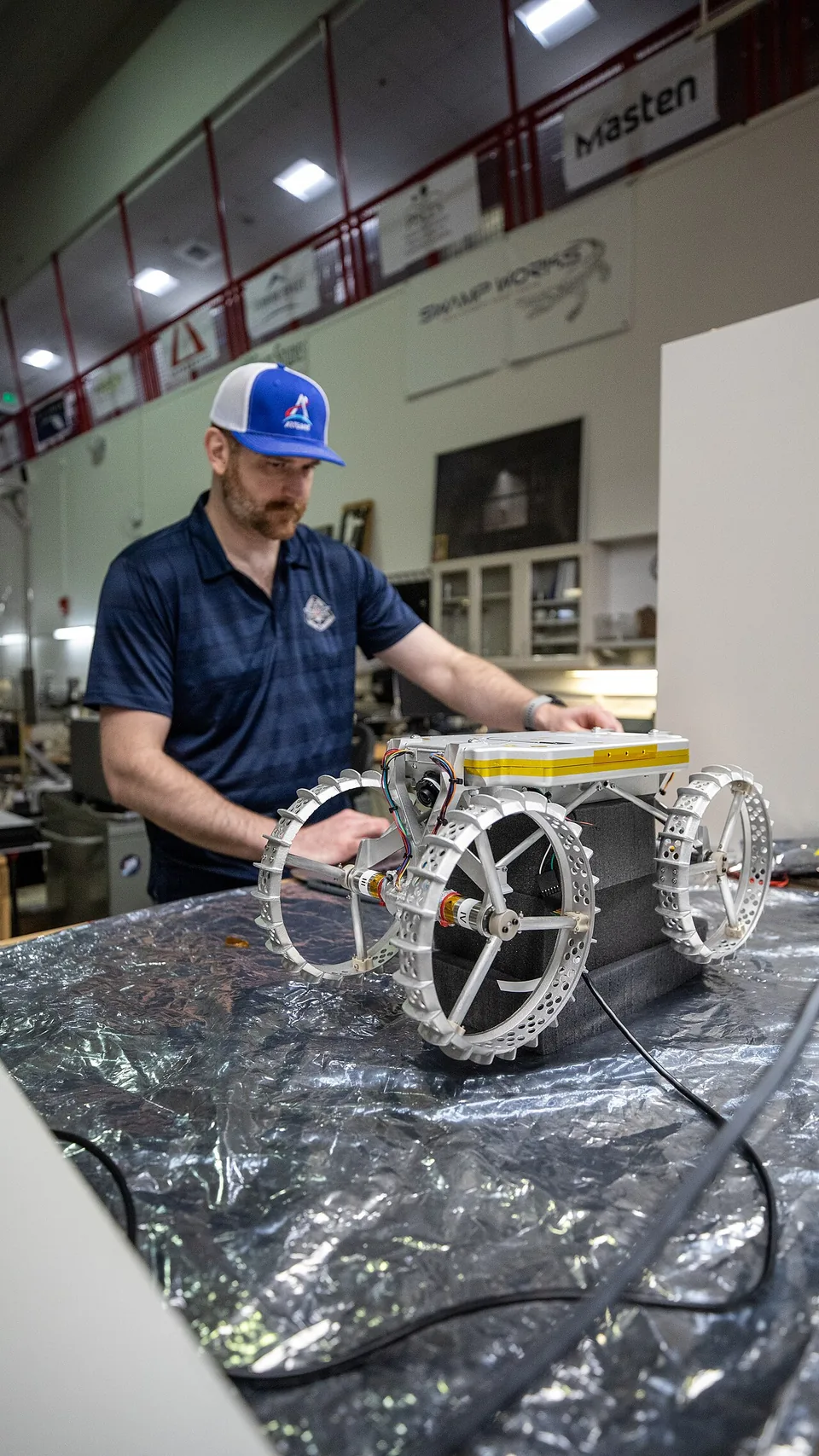
Astrobotic Technology, Inc. is a Pittsburgh company founded in 2007 that builds lunar landers, including Peregrine and Griffin. Established by Red Whittaker, alongside co-founder John P. Thornton according to Wikipedia, the company operates from facilities in Pittsburgh, Pennsylvania. Its development work supports the broader lunar economy.
The company’s product line, as described on the official Astrobotic website:
- The Peregrine Lunar Lander, Astrobotic’s lunar lander that launched on Peregrine Mission One.
- The Griffin Lunar Lander, a landing vehicle with five times the carrying capacity of Peregrine.
- Xodiac, a reusable rocket lander with a heritage of over 600 successful flights.
- LunaGrid, a surface power infrastructure service announced in 2024 that combines lunar landers, rovers, and vertical solar array panels to supply power on the lunar surface.
Peregrine Mission One: Flight Anomaly and Controlled Reentry
Peregrine Mission One launched on January 8, 2024, from Space Launch Complex 41 at Cape Canaveral Space Force Station in Florida. The mission flew on the maiden flight of United Launch Alliance’s Vulcan rocket. Under a 2019 NASA award of US$79.5 million, Astrobotic was to deliver 14 payloads to Lacus Mortis.
A propellant leak prevented Peregrine from reaching the Moon:
- Orbital Profile: The spacecraft never left a highly elliptical Earth orbit.
- Controlled Disposal: The mission ended in a controlled reentry over the Pacific Ocean on January 18, 2024.
NASA’s CLPS listing says Peregrine made a controlled re-entry over open water in the South Pacific at approximately 4:04 p.m. EST on January 18, and lists the mission as completed with no Moon landing.
Griffin-1 Mission Architecture, Payloads, and Contested Schedule
The next lunar landing attempt by Astrobotic will occur using its larger Griffin landing platform on the Griffin-1 mission. On June 11, 2020, the National Aeronautics and Space Administration (NASA) awarded Astrobotic a task order valued at US$199.5 million to deliver the VIPER rover to the lunar south pole. The rover had a mass of approximately 450 kilograms.
In July 2024, NASA announced that it had canceled the VIPER rover project. The cancellation removed the payload that Griffin-1 was contracted to deliver. Despite the cancellation of VIPER, Griffin-1 remains active on Astrobotic’s mission manifest with alternative payloads:
- Astrolab FLIP Rover: Astrobotic confirmed that Griffin-1 welcomed aboard Astrolab’s FLIP rover, as documented on Astrobotic’s flight announcement.
- CubeRover-1: A rover manifested for the Griffin-1 mission.
- Lunar Codex Polaris Archive: A payload manifested on Griffin-1.
- MoonBox Commercial Sub-payload: A commercial sub-payload manifested on Griffin-1.
The target landing location for Griffin-1 is Nobile Crater, situated near the south pole of the Moon.
The operational timeline for Griffin-1 remains subject to conflicting public information. NASA’s official online listing for Commercial Lunar Payload Services still displays an outdated target launch date of 2024. In contrast, Wikipedia’s program summary lists an anticipated launch date of July 2026, while financial documentation cited from corporate parent Voyager Technologies lists the mission as no earlier than November 2026. Astrobotic’s official website provides no active launch date for the mission. Readers tracking the mission should check NASA’s CLPS program portal and Astrobotic directly.
Astrobotic Contracts in NASA Commercial Lunar Payload Services
NASA established the Commercial Lunar Payload Services (CLPS) program in 2018 to contract commercial companies for robotic surface deliveries. Astrobotic was selected for the CLPS vendor pool in 2018.
NASA has awarded Astrobotic two primary task orders under the CLPS framework, designated TO2 AB and Task Order 20A. Separately, Wikipedia lists a US$5.6 million award for the MoonRanger rover, dated July 1, 2019. MoonRanger was initially slated to fly on Masten Mission One; however, that flight was canceled. NASA subsequently re-manifested the MoonRanger payload onto the Firefly Aerospace Blue Ghost lander, with that delivery selection officially announced on July 29, 2025.
| Mission Identifier | NASA Task Order | Award Date | Contract Value | Destination Target | Mission Outcome / Operational Status |
|---|---|---|---|---|---|
| Peregrine Mission One | TO2 AB | 2019 | US$79.5 Million | Lacus Mortis | Completed; failed to reach Moon due to propellant leak; reentered Earth’s atmosphere January 18, 2024 |
| Griffin Mission-1 | Task Order 20A | June 11, 2020 (VIPER delivery award) | US$199.5 Million (VIPER delivery award) | Nobile Crater (South Pole) | Active; VIPER rover canceled by NASA in July 2024; alternative rovers manifested; launch date contested |
| MoonRanger Rover | Not published | July 1, 2019 | US$5.6 Million | Not published | Payload transferred to Firefly Blue Ghost following cancellation of Masten Mission One |
At OrbitalIntel, we track these commercial lunar contracts to analyze how government procurement schedules and technical outcomes shape the broader private space sector.
Corporate Ownership Structure and Investor Context
Astrobotic Technology is not an independent, publicly traded entity and does not maintain a standalone public stock listing. In June 2026, Voyager Technologies announced an agreement to acquire Astrobotic. A SpaceNews headline cited by Wikipedia on July 13, 2026, reported that Voyager Technologies had completed the acquisition, and OrbitalIntel’s own page on Voyager describes Astrobotic as a subsidiary. This ownership detail rests on a single secondary source, so verify it in Voyager’s filings.
OrbitalIntel’s profile of Voyager Technologies stock covers the parent company. Per the reported structure, Astrobotic shares are not available on public markets on their own. This page is educational reference, not investment advice.